Painting the Colors, Light, & Feel of the Southwest
My introductory Zoom session of Sept. 3 is behind us now and the
Four Part series is beginning on
September 10, 2026 at 11am Mountain Daylight Time.
You can register for any or all of Zoom Sessions by clicking the registration link below.
If you would like a full explanation of what this series is all about, please read below.
You can also visit my Patreon Channel to see a video of a condensed version of the introductory Zoom meeting at
https://patreon.com/mikemahonfineartist
You Work Hard. The Paintings Still Don't Feel Right.
You pick up your brush with real intention.
You've studied. Watched videos. Attended a workshop or two. You know about values and composition. You understand color theory in your head.
And yet — most paintings don't come out the way you saw them in your mind.
Some sessions end with a painting you're proud of. Most don't. And the maddening part is that you can't always explain why. You just know something is off. Something doesn't hold together. It works in places and collapses in others, and you're not sure what to fix or where to start.
So you try again. You push through. You improve in small increments.
But you've had this quiet, uncomfortable feeling for a while now: What am I missing?
Here's the answer most painting instruction never gives you:
You're not missing talent. You're missing a system.
The artists who paint with effortless confidence — the ones whose work looks loose and alive and purposeful — didn't get there by accident. They got there by structure. They built a framework so solid and so internalized that it became invisible.
And that framework is learnable.
There Is a Better Way to Approach Every Painting
It's called the DiVine SETUP™.
Seven foundational principles — organized into a single, memorable system — that apply to every painting, in every medium, at every skill level.
Not tips. Not tricks. Not another technique layered on top of confusion.
A framework — the kind that lets you walk up to a blank canvas with clarity instead of anxiety, and walk away from a finished painting knowing why it works.
The name is a mnemonic — built to stay with you:
Just committing these principles to memory will put you light years ahead of where you were before.
— Mike Mahon
DiVine SETUP
Design / Drawing — the single most powerful element in any painting
Values — second only to design; the structure underneath everything
SETUP
Shapes — the great organizational tool of the visual arts
Edges — how you direct the eye and create atmosphere
Temperature — how to control color by mastering warmth and coolness
Unity — making every element belong to the same world
Perspective — how to depict three dimensions on a flat surface
Seven principles. One system. Every painting.
Before you paint a single stroke, you can score any subject or reference photo against all seven principles. If four or five score strongly — you have a winning painting waiting to happen. If fewer than four score well — you may be setting yourself up to struggle before you even pick up a brush. This alone changes everything about how you choose what to paint.
— Mike Mahon
The DiVine SETUP
Scoring Method
Meet Your Instructor
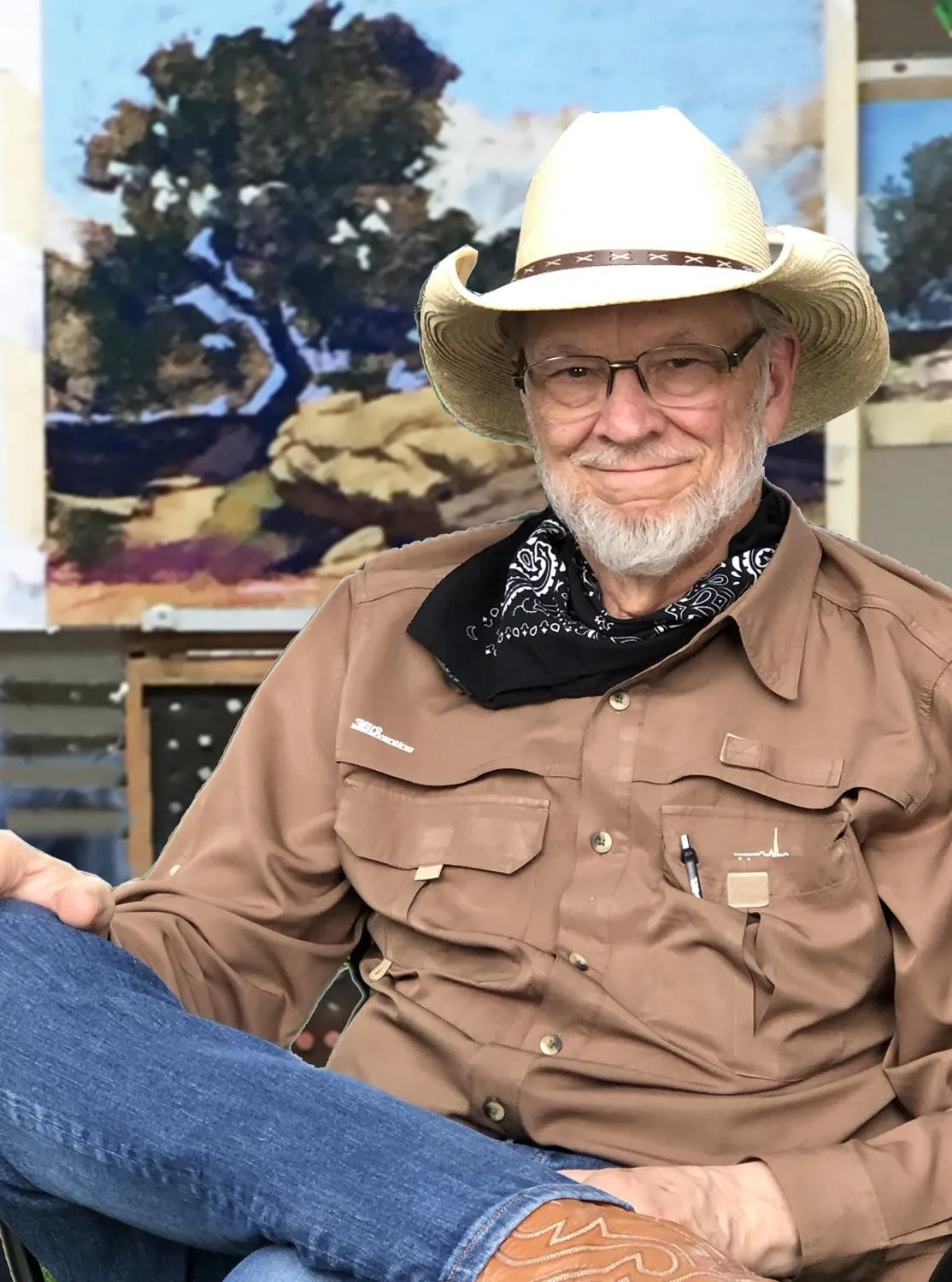
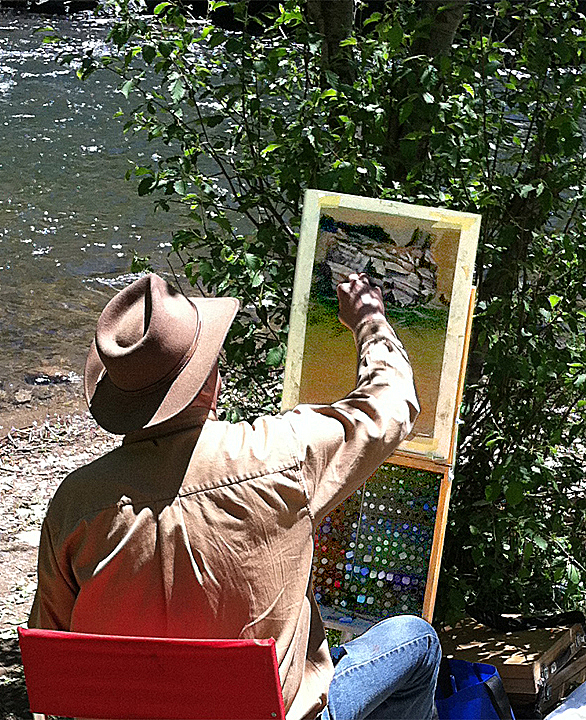
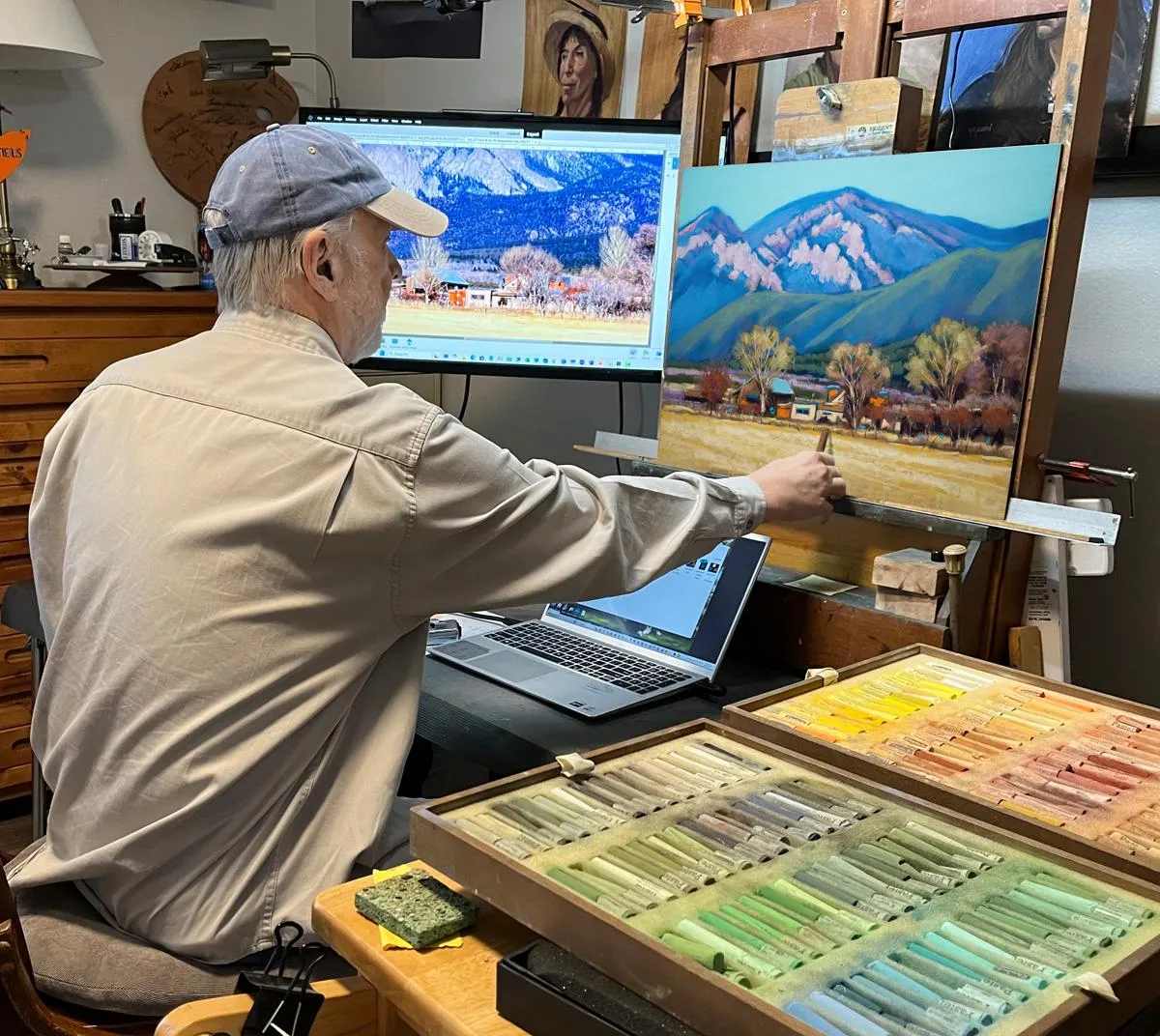
Mike Mahon has been a professional artist for more than 50 years and art instructor for more than 25 years.
He's a New Mexico award winning painter, author, inventor, and workshop instructor whose work spans oil, pastel, watercolor, and photography. Mike has judged many art shows and was featured in the International Artist Magazine North Light book entitled, "How Did They Paint That? 100 Ways to Paint Portraits." He has exhibited at the Bowers Museum in Southern California, presented a professional development series at the Skirball Cultural Center in Los Angeles, and has been selected as a featured instructor and demonstrator at the 2026 International Association of Pastel Societies Convention in Albuquerque — the field's premier gathering.
He is the author of two books: Art Principles: Control Your Painting Process & Conquer Your Fear of Failure and Painting the Land of Enchantment.
He invented the Pastel Porter, a portable plein air painting system used by artists across the country.
But his most important credential isn't any of that.
He learned his system the hard way.
I Was Painting Every Day — and Getting More Frustrated Every Day.
— Mike Mahon
In his 50s, after losing a 30-year business, Mike started painting full time.
He thought the transition would feel natural. He'd painted on weekends for years. He had the skill. He had the time. What he discovered was that painting occasionally and painting every day were completely different experiences — and he wasn't prepared for it.
Nearly every painting was fraught with confusion.
The frustration was accumulating. The only pleasure came in the last few minutes of a painting — moments of clarity that felt like accidental luck after hours of pain.
He knew he needed more than inspiration. He needed structure.
He committed to workshops, studied art literature seriously, and eventually met Ben Konis — a painter trained at the New York Art Students League — who taught him a disciplined, step-by-step painting procedure. Mike combined that procedure with the seven aesthetic principles he'd been developing for years.
His career didn't just improve. It transformed.
At his first regional art exhibition — unknown, unaffiliated, just a commercial photographer and graphic artist with a hope — he was called aside by the show director after the awards.
She wanted to know why she'd never heard of him.
That day he received: Best of Show— 1st Place — Pastels. 1st Place — Watercolor. 1st Place — Photography. And 2nd Place in Oil — because the judge, the art department chairman of the near by state university, was instructed to stop giving him all the first-place ribbons.
When I returned home, my wife and I wept — because we knew we had made the right decision.
— Mike Mahon
This wasn't natural talent suddenly unlocking. It was preparation meeting a proven system.
That system is what this series is about.
The Free Introductory Session —
What You'll Experience
September 3, 2026, 11am MST -
Live on Zoom | Free
Why most painters plateau — and what's actually holding them back.
This isn't a sales presentation with a little teaching tacked on.
It's a real session — a genuine first class in the series — designed to give you immediately useful insights you can apply the next time you pick up a brush. Whether or not you ever join Patreon, you'll walk away with something valuable.
Here's what's covered:
It's rarely talent. The real obstacle is almost always a missing framework. You'll understand clearly, perhaps for the first time, why some paintings work and others don't — and it has almost nothing to do with how skilled you are.
The DiVine SETUP™ —
a complete introduction to all 7 principles
You'll get a clear overview of the full system: what each of the seven principles does, how they relate to each other, and why the order matters. You'll leave knowing a vocabulary for talking about painting — and a lens for seeing it — that most artists spend years without.
The Scoring Method —
how to evaluate any painting before you start
You'll learn how to apply the seven principles as a checklist to any reference photo or scene. Rate each one independently. If four or five score well, you have a winning subject. This single tool can save you hours of frustration and wasted paint.
Three practical insights you can use immediately
Insight 1: The Squint Test
Hold your reference at arm's length. Slowly close your eyes until you're squinting through your eyelashes. Keep squinting until all the color disappears and you can see only three to five values.
Everything that disappears in your squint? That's detail — not structure. You don't need to paint it.
What remains? Those are your major shapes and value masses. That is your painting.
The irony is that the artist's job is to reduce thousands of values down to three, four, or five.
— Mike Mahon
How many times have you spent hours working a little detail in the corner of your canvas? News flash: nobody cares about that detail.
— Mike Mahon
Insight 2: The Center of Interest Rule
Every element of visual power in a painting — lightest lights, darkest darks, hardest edges, warmest warms, coolest cools, most saturated colors, greatest detail — should be concentrated at or near your center of interest.
Everything else? Let it whisper.
Insight 3: Rules Invite Freedom
Most artists believe that rules and structure inhibit creative expression. The opposite is true.
The blank canvas isn't freedom. It's paralysis.
When you commit to six shapes or fewer, one center of interest, one story — those constraints don't cage your creativity. They give it something to push against.
Decisions get made faster. Energy goes toward expression instead of confusion.
The enemy of art is the absence of limitations.
— Orson Wells
The Scoring Method —
how to evaluate any painting before you start
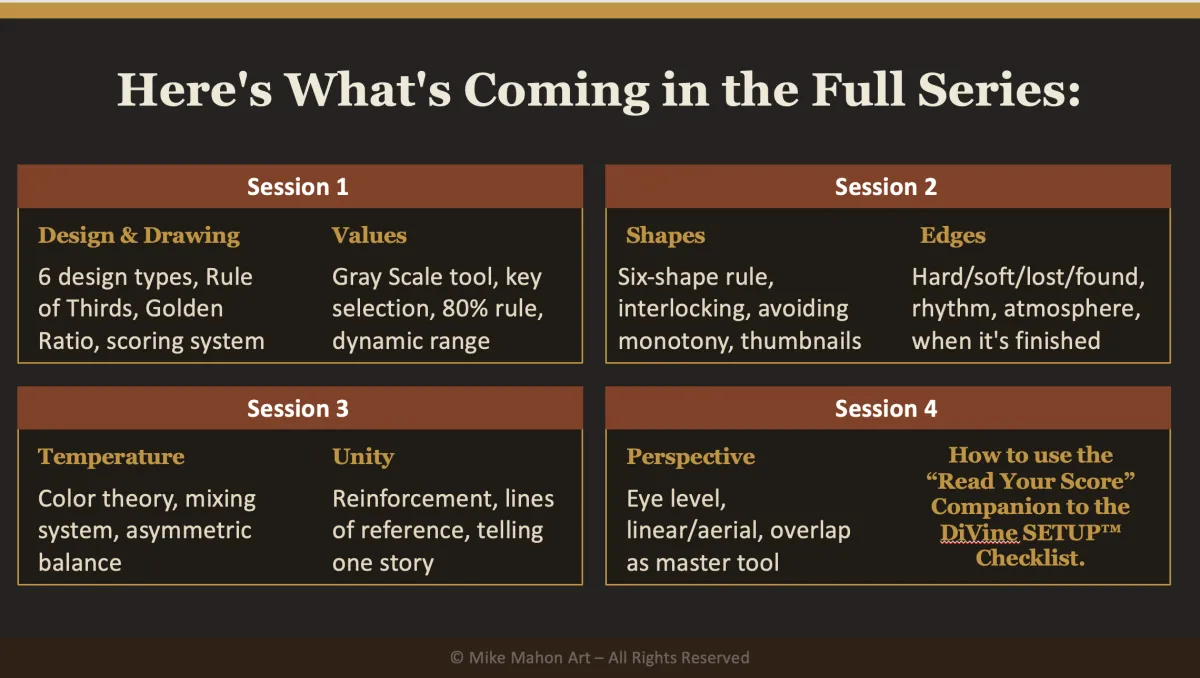
A preview of the full
4-session series
You'll see what's coming in the weeks ahead, so you can decide whether the deeper journey is right for you.
No pressure.
Just a clear look at what's possible.
You'll leave this session able to:
✓ Identify why a painting is or isn't working — in any medium, at any skill level
✓ Evaluate a reference photo before committing paint to canvas
✓ Name the seven principles that govern every strong painting
✓ Apply the Squint Test on your very next painting session
✓ Know where to concentrate visual power — and where to let things rest
WHO THIS IS FOR.
This Is for You If…
→ You've been painting for a while and still feel like you're reinventing the wheel with every new canvas
→ You start a painting excited and often end it defeated — and you're not sure what went wrong
→ You've taken workshops or watched tutorials, but feel no more confident than when you started
→ You want to understand what makes a painting work — not just copy techniques
→ You're an art lover or collector who wants to understand how strong paintings are built, so you can look at work with educated eyes
→ You're a beginner who wants to start with a solid foundation rather than pick up bad habits that take years to unlearn
This Might Not Be for You If…
→ You're looking for a quick fix or a shortcut that bypasses understanding
→ You're not interested in the why behind painting decisions — just the how
→ You've already built a consistent, reliable process that gives you satisfying results
That last group is small. If you're reading this, you're probably not in it.
What Students Say
“Being a novice, the step-by-step process has given me a solid foundation on which to build any work in any medium that I may choose. I have learned more this week than I have in all the other workshops I have taken this year — combined.”
— Joy Russo, Hot Springs, Arkansas

“By far the best workshop I've ever attended. I learned more from Mike than any class I took in college. I've learned to slow down and spend the time it takes to plan out a painting — values, and center of interest. Seriously — the best, most informative teaching and learning experience I've had.”
— Eleanor Leeper, art teacher, Andrews, Texas
“"I liked how the basic concepts were covered in the DiVine SETUP — it was basic information for the beginner, yet enough content and detail for the more advanced artist who had heard it before. I would definitely recommend your workshop to artists, both beginners and advanced.”
— Glenn Thomason, Harlingen, TX
How the Series Works
The introductory session —was free, open to everyone. But you can still see a video of a condensed version of the introductory Zoom meeting at
https://patreon.com/mikemahonfineartist
When you register you will immediately receive a Zoom link to the session or sessions your registered and paid for.
Sessions 1–4— live on Zoom, registration is required. Each weekly session will be $15 or $60 for the full 4 part series.
Recordings and on-demand access. If you miss a live session, a replay will be available for at least 72 hours. After that, it will only be available to Patreon members. Every session is archived there and available to members anytime — rewatchable, no scheduling conflicts, no pressure.
Patreon membership also includes:
Behind-the-scenes studio commentary and articles
In-depth painting demonstrations beyond the series
The complete 117-page Art Principles book PDF at the Mastery Workshop level (limited-time offer)
Options for direct critique of your work and private coaching if you want to go further
If you'd like to explore membership before the session, you're welcome to browse: https://patreon.com/mikemahonfineartist
A Few Quick Answers
Do I need to be a member of Patreon to attend any of the sessions?
No. Registration is open to anyone. However, members of my Patreon Mastery Workshop Level and above do not have to register. They will receive a free link to all sessions as a perk of their membership.
What skill level is this for?
Beginner through intermediate. The DiVine SETUP is foundational, which means it's immediately useful to artists who are new to structured thinking about painting — and genuinely eye-opening to artists who've been painting for years without a reliable framework. Art lovers and collectors who want to understand how great paintings are built will also find this session valuable.
What medium do I need to paint in?
None. The seven principles apply to oil, pastel, watercolor, acrylic, gouache, and any representational medium. This is about visual thinking — not technique specific to one material.
What if I have to miss the session I register for.?
If you miss the live session, Patreon members can access the recording anytime. Non-members who register will have access to a replay for at least 72 hours.
Is this a sales presentation?
No. You'll receive substantive instruction regardless of whether you ever join Patreon. The Patreon option exists for those who want to go deeper. There's no pressure.
How long is the session?
Approximately 60–90 minutes, including time for questions.
"Confidence comes not just from talent — but from preparation, principles, and a reliable process."
— Mike Mahon
Painting doesn't have to be a constant struggle between inspiration and frustration.
There is a way to approach the canvas that is structured, learnable, and — once it becomes second nature — genuinely freeing.
Come and see.
“You don't pull your punches. If a painting has elements that are not well done, you say so, and work with the artist to make improvements. I have been distressed in past workshops when no real critique was provided, other than the false critique of gushy flattery. Thank you for your encouragement and your expertise.”
— Martha Wofford, Ph.D., Dalhart, TX
“Mike is a wonderful artist who also has the ability to communicate. This is a rare trait with exceptional talent like his.
[I learned] how to start a painting: putting the right shape of the right value of the right color in the right place with the appropriate delineation of edge”
— Beth Cooper, Santa Fe, New Mexico
“"What I love about your classes is learning how to paint with intention and get to closure with purpose and clarity.”
— Marti Hines, Alpine, Texas
Painting the Colors, Light, & Feel of the Southwest


